

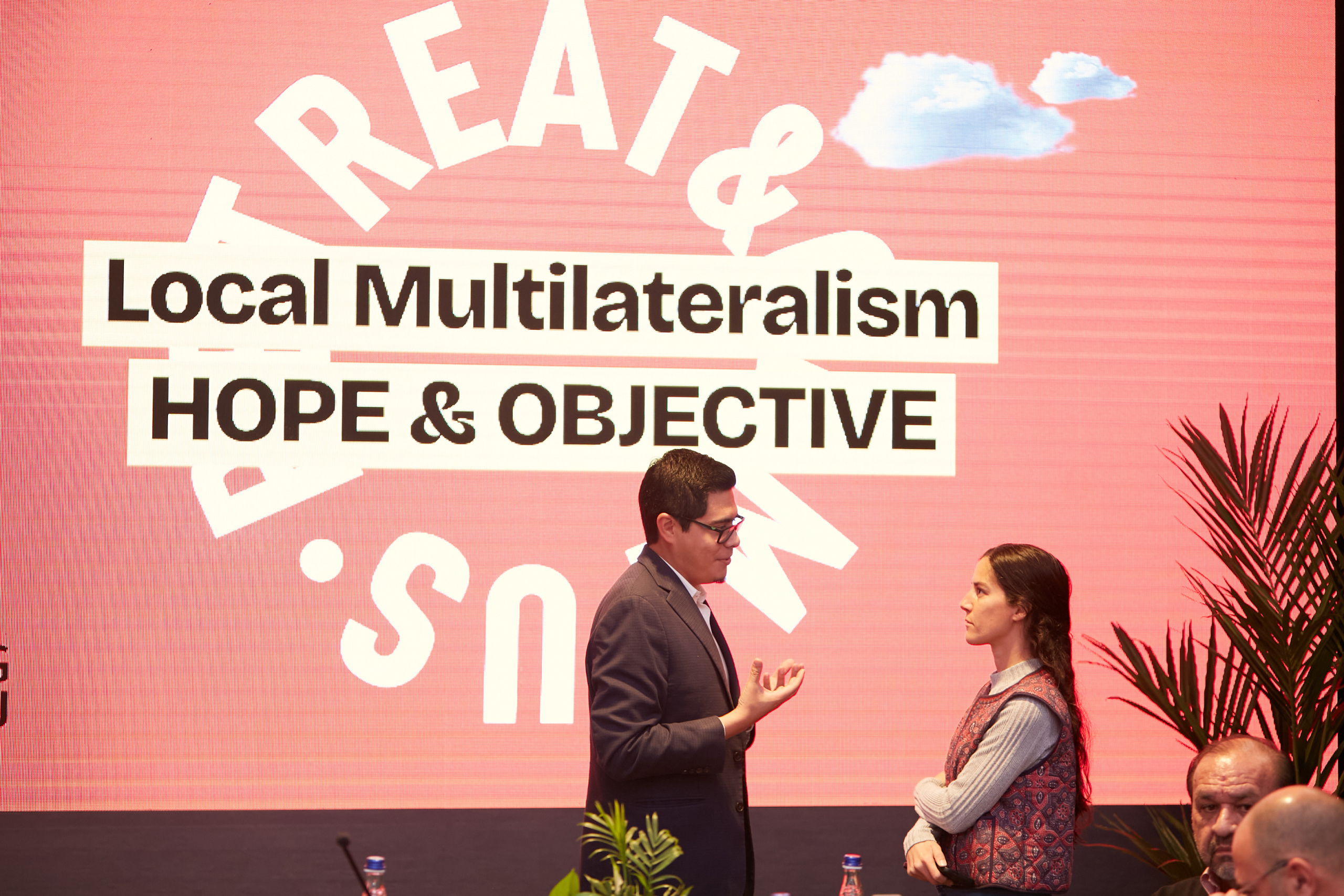
These are some of the reflections in the room as participants explored what the post-2030 landscape could look like for cities.
If today’s framework continues, the task is to defend what works while pushing harder on delivery and financing.
If a new framework replaces it, local governments need to shape its content early, rather than reacting once the rules are set.
If the system fragments, cities will have to navigate multiple political tracks at once, protecting local interests across regional and sectoral arenas.
If no shared framework survives, trust, proximity and public service delivery may become the main sources of legitimacy in the absence of global coordination.
Across all four scenarios, one conclusion stood out: whatever happens to multilateralism after 2030, cities and regions will still be expected to deliver. The strategic question is whether they will do so with political backing—or in spite of its absence.
So where should cities place their bets today: on defending the current framework, shaping the next one, building alliances across fragments—or preparing to act without a shared rulebook at all?