

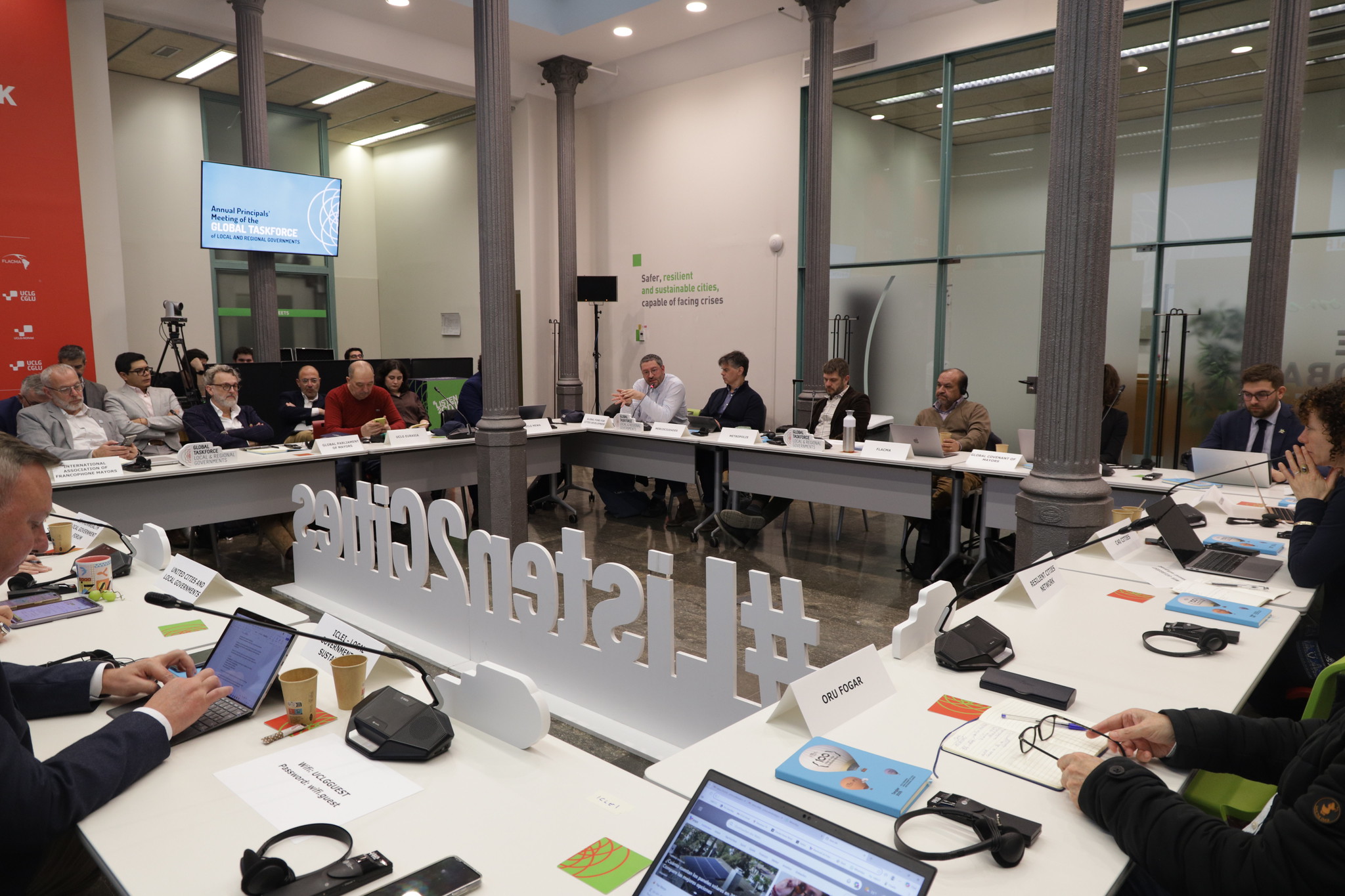
On Monday, 23 February 2026, the Global Taskforce of Local and Regional Governments— networks representing local and regional governments — convened for a frank, strategy-focused retreat to assess mounting global challenges and chart a practical way forward.
Participants described a strained international context marked by democratic backsliding, polarised politics, shifting financing flows and an evolving multilateralism that increasingly relies on coalitions of the willing. Against that backdrop, they underlined both risk and opportunity: cities and regions are increasingly called upon to deliver public services, yet the constituency’s institutional gains remain fragile without decisive follow-up.
A focus was the United Nations Pact for the Future, and in particular action 55e, which points to more structured engagement with local and regional governments. While the report validates the role of local and regional governments and outlines options to formalize participation, there is no automatic next step. Participants argued for urgent engagement with UN80, the Economic and Social Council (ECOSOC) and High-Level Political Forum (HLPF) reform processes to turn the report into durable access and political influence.
Practical priorities emerged clearly: make service delivery and access to finance the core “bridge message” to national governments; strengthen national associations (the “missing middle”), so global commitments translate into national policy and budgets; and develop a short, shared messaging brief and roadmap identifying priority member-state allies and named outreach leads.
Participants also recommended a coordinated local and regional government (LRG) steering approach across the Rio Conventions (climate, biodiversity and desertification), and stressed the political importance of defending human rights, reclaiming democratic narratives through creativity and culture, and sustaining municipal diplomacy, signalling a constituency that is coming of age politically and seeking a more strategic role within global governance debates. In sum, the principals agreed on pragmatic, time-bound actions: consolidate simple, persuasive messages; expand and diversify allies; and mobilise small task teams to pursue ECOSOC and HLPF entry points, while continuing detailed strategy sessions throughout the retreat, reflecting a movement moving from recognition towards a more mature, coordinated exercise of political influence.
The tone was urgent but resolute: the moment is critical, and local governments must turn recognition into real political power to shape global decisions that affect people’s daily lives.