

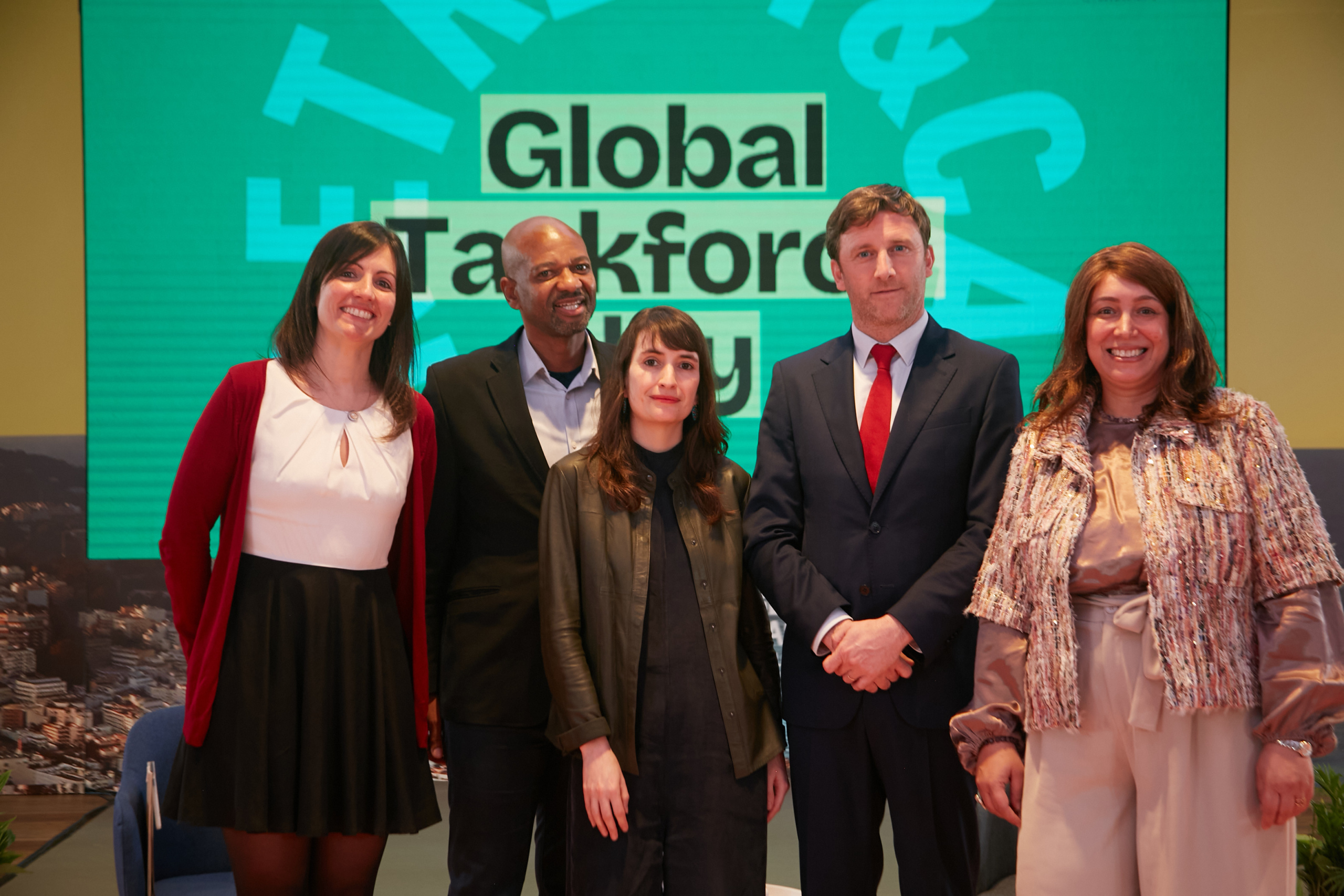
With 2026 set to mark a decade since the adoption of the New Urban Agenda, local and regional government leaders meeting at the UCLG Retreat in Barcelona argued that the anniversary should be treated as a political hinge point—less commemoration, more course-correction. The message across the room was consistent: the New Urban Agenda remains a useful frame, but the next phase will be judged on whether it delivers power, resources and measurable results for cities and territories.
Opening the session, Anna Calvete, UCLG Head of Research, urged participants to slow down and take stock. “Ten years since Quito… is not simply a symbolic anniversary, but a political moment,” calling for a “strategic pause” amid strained multilateralism and a 2030 Agenda that is falling behind. The discussion, she noted, had three objectives: to assess what the New Urban Agenda has meant for local governments, identify gaps, and situate the agenda within wider debates, including the SDGs, the Pact for the Future and post-2030 discussions.
From South Africa, Sithole Mbanga, CEO of the South African Local Government Association (SALGA), brought the conversation back to the realities of climate impacts and municipal balance sheets. Extreme events, he said, are no longer episodic. “In the last four months, around six out of nine provinces have been impacted,” he noted, citing fires and floods and warning that the consequences are financial as much as humanitarian. “If we are to fund the New Urban Agenda… we’re going to have to think about how we finance the work that we’re doing as local government.”
That financing thread resurfaced in the open floor discussion, where several participants argued that large investment strategies still tend to treat local institutions as implementers rather than partners. Ryan Knox, Managing Director of SALAR International, pointed to top-down approaches to infrastructure and green transition funding, including the EU’s Global Gateway, and suggested that the New Urban Agenda could serve as a political bridge into those debates. Localisation, he argued, needs to become a condition of financing frameworks—because delivery ultimately happens at the local level.
Housing emerged as the session’s sharpest fault line. Camila Cociña of the International Institute for Environment and Development (IIED) urged participants to keep a rights-based lens at the centre of the New Urban Agenda follow-up—one that reflects the breadth of what municipalities actually do, from data collection and regulation to shaping markets and, at times, direct provision. Local and regional governments, she argued, carry responsibilities linked to “the recognition, the protection and the fulfilment of the right to adequate housing”. She also raised a politically sensitive issue gaining urgency across regions: forced evictions. “Forced evictions nowadays are fuelled by climate change, but also sometimes justified through climate arguments,” she warned, noting that displacement can deepen vulnerability even when framed as risk reduction.
For Sébastien Vauzelle, Head of the UN Local2030 Coalition Secretariat, the upcoming New Urban Agenda review comes “at the right moment”, but he urged a shift in posture—from insisting on local relevance to demonstrating local impact. “Now is the time to show the differentiated impact of bottomup approaches,” he said, calling for a stronger focus on action, results and financing to scale what is already working. He framed 2026 as a pivotal “year for cities”, linking the housing focus at the World Urban Forum, the SDG 11 review at the High-Level Political Forum and the runway towards post-2030 negotiations.
The open floor repeatedly returned to the question of power—and, specifically, the uneven legal mandates under which mayors operate. Eckart Würzner, Mayor of Heidelberg and Chair of the UN Forum of Mayors, argued that global expectations often ignore basic governance realities. “If you are not empowered as a mayor by a legal framework, you do not have the responsibility to deliver services,” he said, pointing to differences in competencies over energy, water and housing that determine what cities can actually do. The implication, he added, is structural: “National governments have to give up power to local governments.”
Moderating the discussion, Neila Akrimi, Advisor for International Relations at the Arab Towns Organization, pressed participants to be blunt about what has, and has not, translated into change over the past decade of New Urban Agenda implementation. “Has political recognition translated into structural reform? Has reporting translated into influence? And has localisation translated into redistribution of power and resources?” With post-2030 discussions approaching, she suggested the movement may need to “move from consolidation to repositioning”, shifting from defending gains to reshaping political strategies in a more contested global environment.
In her final intervention, UCLG Secretary-General Emilia Saiz offered a frank assessment. Localisation has gained traction, she said, but key political battles have lost momentum. “The whole decentralisation story and the whole multilevel governance story are being left behind.” On housing, she was even more direct: “We have failed miserably on the housing agenda.”
Akrimi wrapped up the discussion with a set of questions she urged participants to carry forward as a compass: “Where have we settled? Where have we adapted to constraints instead of challenging them? And where do we need to be more strategic?”