

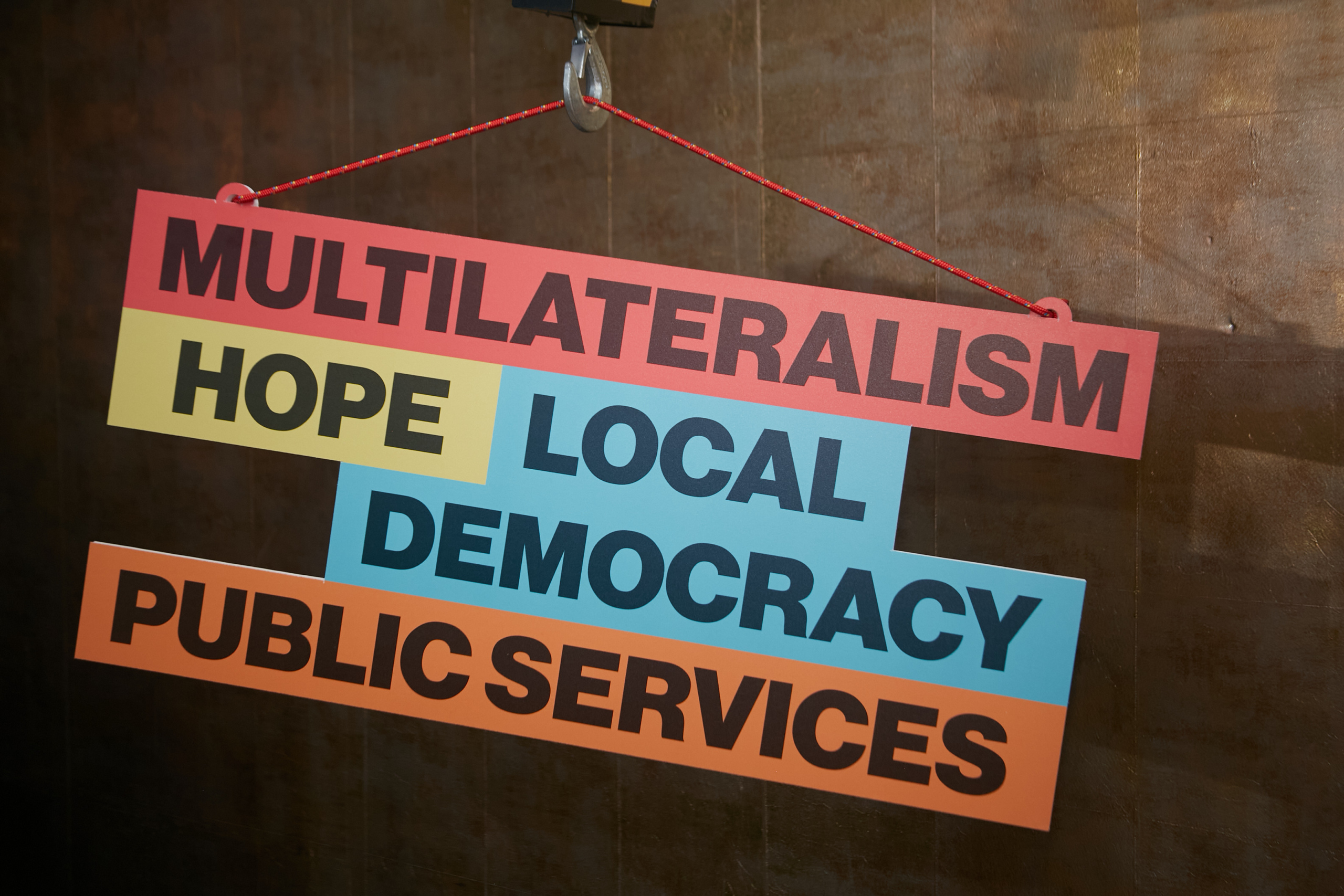
Some words escape specialist circles and suddenly enter everyday political language. This week, “plurilateralism” did exactly that. Repeated across the Democracy and Plurilateralism session of the UCLG Annual Retreat, the term surfaced not as jargon, but as a shared reference point for how international cooperation is changing.
At its simplest, plurilateralism describes cooperation among several actors who choose to work together around a specific issue. Unlike multilateralism, built on universal or near-universal membership and shared rules, plurilateral arrangements are selective by design: they bring together those willing and able to move on a given agenda — climate, transparency, procurement, digital governance — without waiting for consensus from everyone.
The linguistic contrast matters. “Multi” suggests many, even all; “pluri” suggests several. It is a small semantic shift, but a revealing one. Multilateralism evokes the image of a shared table where everyone is invited, even if agreement is slow and uneven. Plurilateralism reflects a world of smaller tables, narrower agendas and faster conversations. The term has moved beyond academic circles: major dictionaries now recognise it, and in French, Spanish and Portuguese (plurilatéralisme, plurilateralismo) it has become standard policy vocabulary. The ease with which the word travels reflects how widely the underlying practice has spread.
Plurilateralism also sits within a growing family of “lateralisms.” Bilateralism remains the most familiar format of cooperation, especially in diplomacy and trade. Regionalism organises collaboration among neighbours. “Minilateralism,” a term gaining traction in geopolitical analysis, refers to small groups of powerful actors coordinating on strategic interests. Each format reflects a different trade-off between inclusiveness, speed and political leverage. Plurilateralism occupies the middle ground: broader than bilateral deals, narrower than universal multilateral agreements.
For cities and local governments, this shift has opened new spaces for action. Climate networks, transparency partnerships and thematic alliances allow municipalities to cooperate directly, share standards and accelerate implementation without waiting for national-level agreements. Yet the word carries an implicit tension. Plurilateralism can enable progress, but it can also normalise fragmentation. Selective coalitions risk sidelining voices, diluting shared values or turning cooperation into a series of transactional deals. As several speakers noted, the political challenge is not whether plurilateralism exists, but what kind of plurilateralism is being built — and under which standards of accountability and democratic coherence.
If multilateralism is the grammar of universal cooperation, plurilateralism is the grammar of a more fragmented world — one of networks rather than fixed tables. Will “plurilateralism” become the word of the year in 2026? Probably not. But it might quietly deserve the title. Not because it is new, but because it names a reality that has already arrived.