

Across regions, democratic erosion is being felt first at the territorial level. Local and regional leaders described how centralisation, fiscal constraints and political interference are narrowing the capacity of municipalities and regions to govern, deliver services and protect civic space — with direct consequences for democratic legitimacy.
Paola Pabón, Prefect of Pichincha, offered a stark account of the pressures facing subnational governments in her country. Recent political developments, she argued, have weakened territorial autonomy and undermined democratic practice. Referring to the arrest of Quito’s elected mayor, she said such actions go beyond established legal norms and contribute to what she described as the “politicisation of the law.” For Pabón, decentralisation is not a technical matter but a democratic condition. When resources and authority are recentralised, she warned, local governments lose the capacity to deliver on care policies and rural support — and citizens lose trust in institutions meant to represent them.
From North Africa, Mohamed Sefiani, Mayor of Chefchaouen, stressed that no city can face democratic pressure alone. Territories, he argued, are essential political actors, but local multilateralism only works when it is grounded in practical cooperation with civil society and other local governments. Protecting essential services as public goods, and giving residents an active role in shaping them, is part of how cities can defend democratic space in everyday governance.
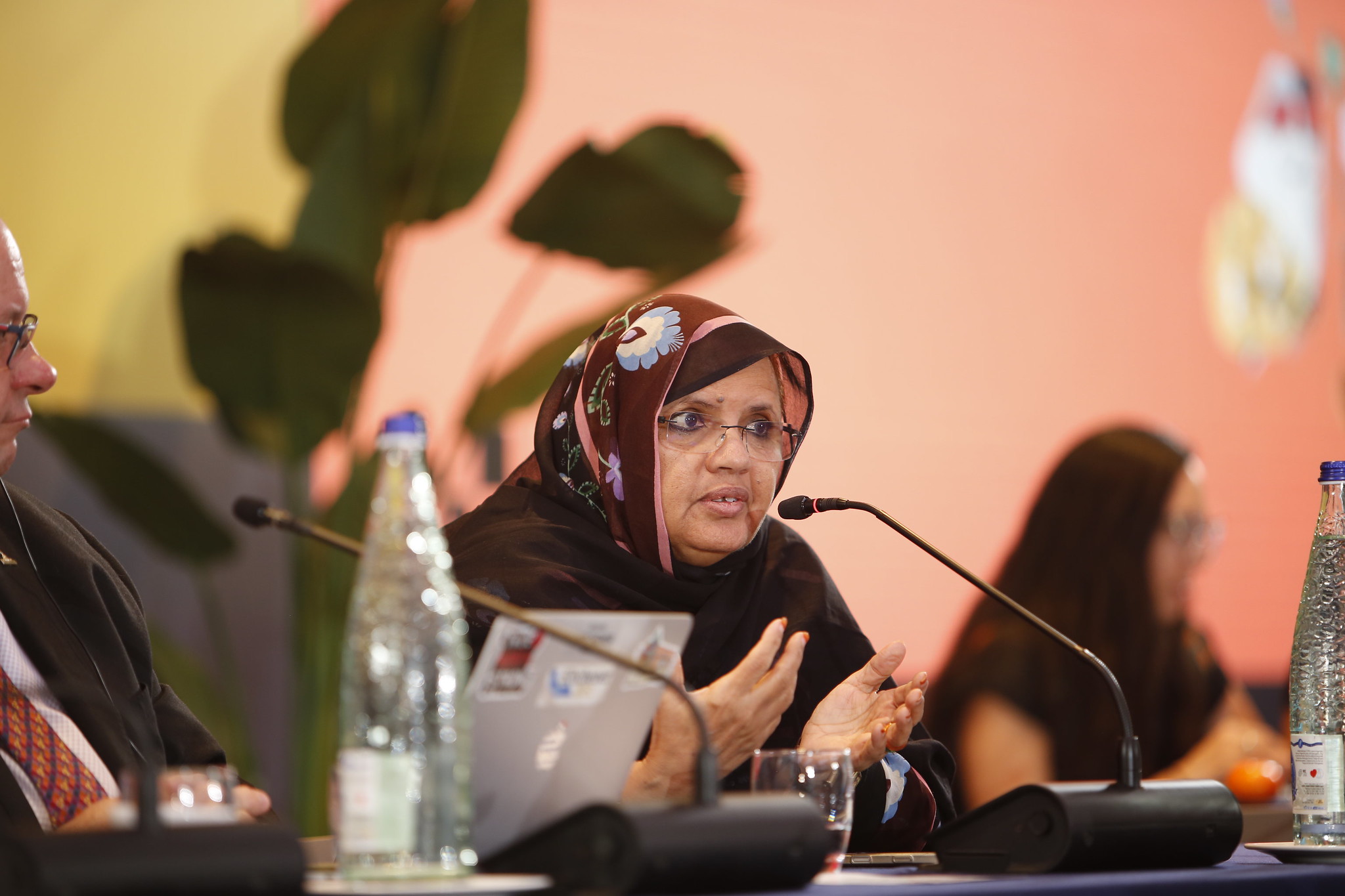
From Africa, Fatimetou Abdel Malick, President of the Nouakchott Region and UCLG Co-President, linked democratic pressure to demographic and territorial realities. Rapid urbanisation across African regions, she said, is intensifying demand for housing, water, employment and basic services. Trust in institutions, in her view, depends on whether regional governments are given the authority and resources to respond at scale. Women, she added, play a critical role in sustaining social cohesion and service provision, yet remain underrepresented in conflict resolution and decision-making spaces.
Bheki Stofile, President of the South African Local Government Association (SALGA), situated territorial pressure within a wider landscape of overlapping crises. Armed conflicts, economic coercion, climate impacts and geopolitical shifts, he argued, are reshaping municipal realities: “We are the first responders,” pointing to the destruction of local infrastructure in conflict zones and the strain placed on basic services by displacement and economic disruption. In such contexts, he argued, local governments are asked to rebuild livelihoods without commensurate authority or resources. Unity within UCLG and financial sustainability are not organisational concerns but political preconditions for defending local democracy, he added.
Territorial vulnerability was also linked to civic space and political participation. A representative of the Observatory for the Defence of Local Democracy, based in Bilbao (Spain), described how the initiative works with municipalities to identify risks to local democratic practice and provide technical support and training. By monitoring early signs of democratic erosion and supporting institutional resilience, the Observatory aims to equip local governments to respond before restrictions on participation and autonomy become entrenched.
Other interventions pointed to the geopolitical consequences of shrinking territorial authority. Speakers referred to conflicts in Ukraine and Gaza, economic pressure through trade measures and tariffs, and climate shocks that do not recognise borders. For municipalities, these dynamics translate into concrete pressures on housing, infrastructure and public services — often without a corresponding increase in fiscal space or political voice in international forums.
Across regions, a common concern emerged: when decentralisation is weakened, democratic erosion accelerates. Local and regional governments lose room to manoeuvre, citizens experience service gaps more acutely, and the space for participation narrows. In this context, defending territorial autonomy was framed not as an institutional privilege but as a democratic necessity.
As the municipal movement prepares for the next phase of its collective positioning, the message is clear. Territorial governance is not a peripheral layer of democracy. It is where democratic erosion becomes visible — and where democratic renewal must begin.