

Care is not a private matter, nor a passing policy trend. It is a public responsibility that must be built in territories.
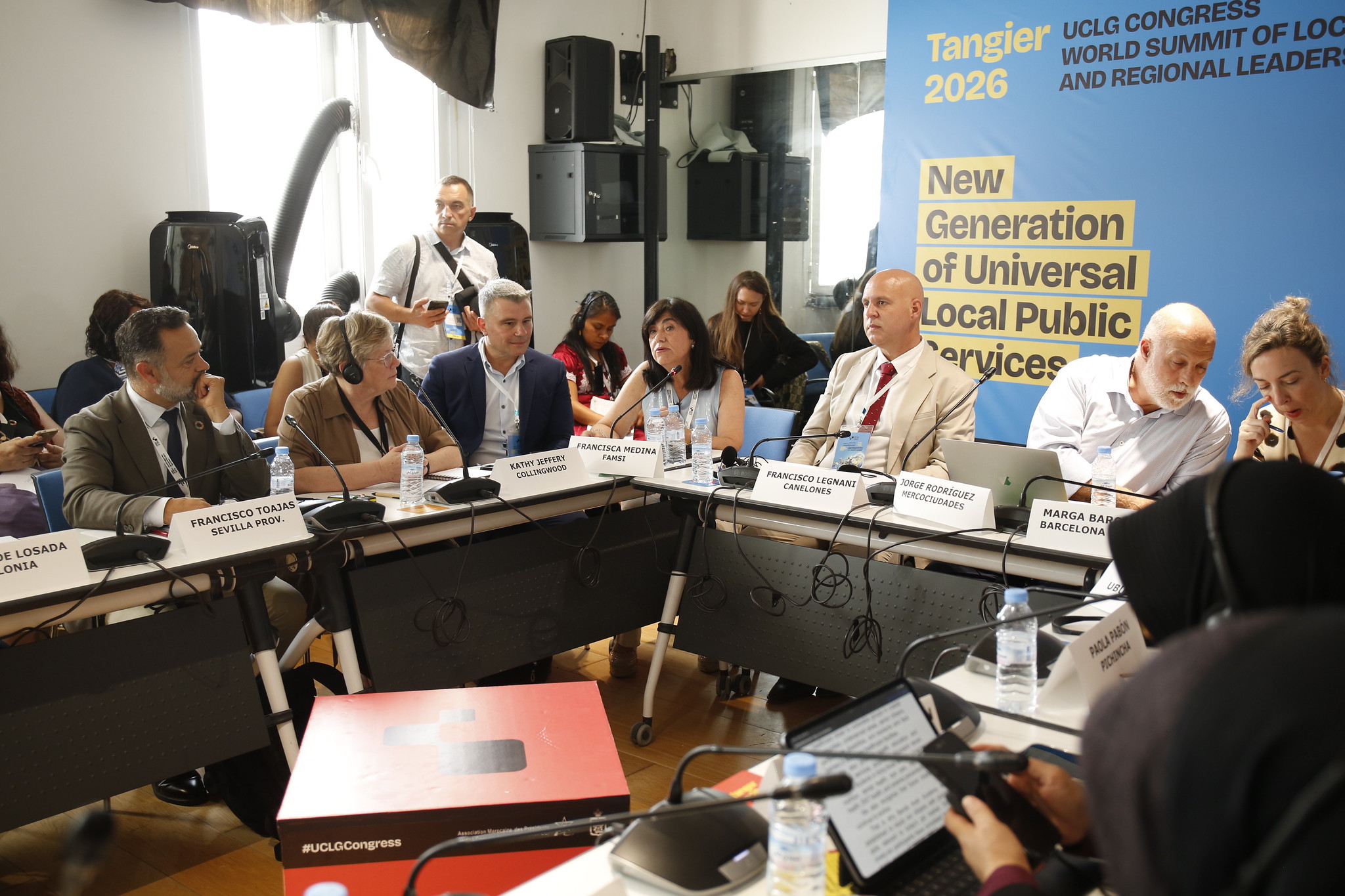
That was one of the messages of the roundtable Caring Territories: Partnerships for Integrated Policies, convened by Mercociudades in collaboration with UCLG, the Regional Government of Catalonia, FAMSI, the Diputación of Sevilla and the Global Alliance for Care.
Moderated by Jorge Rodríguez, from the Permanent Technical Secretariat of Mercociudades, and Marga Barceló, Head of International Projects and Development Cooperation at the Diputació de Barcelona, the session brought together local and regional governments, researchers and partners to discuss how territories can build integrated care systems.
Francisca Medina Teva, Vice-President of FAMSI and deputy of the Diputación de Jaén, presented care as an element of urban sustainability, stressing that care is neither infinite nor free. She called for a new social pact that places life at the centre of municipal action.
Paola Pabón, Prefect of Pichincha, argued that care is a political conversation about how societies organise life in common. She linked care to justice, equality and democracy, and warned that it is impossible to speak about care without addressing violence against women and the destruction of community ties. Ana Falú, Director of CISCSA and a long-standing reference on feminist urbanism and women’s right to the city, warned that when the state withdraws, care responsibilities are pushed back into families, often increasing household debt and falling disproportionately on women. She linked this dynamic to the need to build public care systems grounded in rights, proximity and territorial justice.
The discussion also highlighted the need to move from care services to care systems. Francisco Toajas, Vice-President and Deputy for Development Cooperation at the Diputación de Sevilla, presented the work being developed through FAMSI and Mercociudades to understand how care is organised in municipalities, make care work visible and move towards multiactor and multilevel systems.
Agustí Fernández de Losada, Secretary for European, Multilateral and Development Cooperation Affairs of the Government of Catalonia, connected the care agenda with feminist cooperation, democratic governance and social cohesion. From Canada, Kathy Jeffery, Councillor of Collingwood, stressed that care becomes tangible at the local level through housing, transport, services and community support.
Speakers from Benin, Scotland, Indonesia and other territories also brought different perspectives on care across the life course, including disability, unpaid care, early childhood, climate vulnerability and the role of women in sustaining communities. Marta Galceran-Vercher, researcher at CIDOB, linked the debate to decentralisation, arguing that caring cities require governments with the means, legitimacy and mandate to act.
The session concluded with a shared message: care is social infrastructure. Building caring territories requires human rights-based approaches, coresponsibility, gender equality and strong alliances across sectors and levels of government.