

Public service workers are essential for a just society
There could be no better way to start the official meetings of the UCLG Congress than by celebrating those who are at the center of its shared political vision for the next four years and beyond 2030.
The theme of the Congress, “A new generation of local public services”, is both a call and a commitment, as UCLG Secretary-General Emilia Saiz expressed in her welcome to participants in the Municipal Times Outlook, for local and regional governments leaders to ensure quality, accessible and rights-based service provision to citizens.
And public workers, more than 400 million worldwide, with ILO estimates indicating that around 47% are women globally and 57% in OECD countries, and that just over one-tenth (11 per cent) of the world’s employment is in the public sector, are key to the future of local public service provision. They play vital roles as firefighters, teachers, care workers, transport workers, sanitation workers, social workers, as well as municipal staff in city halls. Their work touches every part of citizen’s daily lives.
The UCLG Executive Bureau will have the opportunity to celebrate the International Day of Public Service with a dialogue between local and regional government leaders and representatives of public service workers to explore how to strengthen collaboration. It will also be a great setting for the launch of the Public Services International (PSI) and UCLG Global Framework Agreement on Social Dialogue and Cooperation, reinforcing their commitment to public services and decent work.
Public service is defined as the broad range of services provided by government agencies and public institutions. These services exist to benefit the general public rather than generate a private profit, and they are funded primarily through taxes and government budgets. The public sector plays a central role in the provision of essential goods and services as well as in promoting growth, social cohesion, and communal well-being. It relies on its diverse workforce spread across economic activities and occupations.
Still, even after a global pandemic, when the role of key workers providing essential goods and services gained visibility, and with 25 per cent of key workers employed in the public sector in high-income countries, the proportion of public sector employment declined between 2014 and 2024 in 58 out of 94 countries with available data. Among the 34 countries where the share of public sector employment increased, the median rise was a mere 1.3 percentage points.
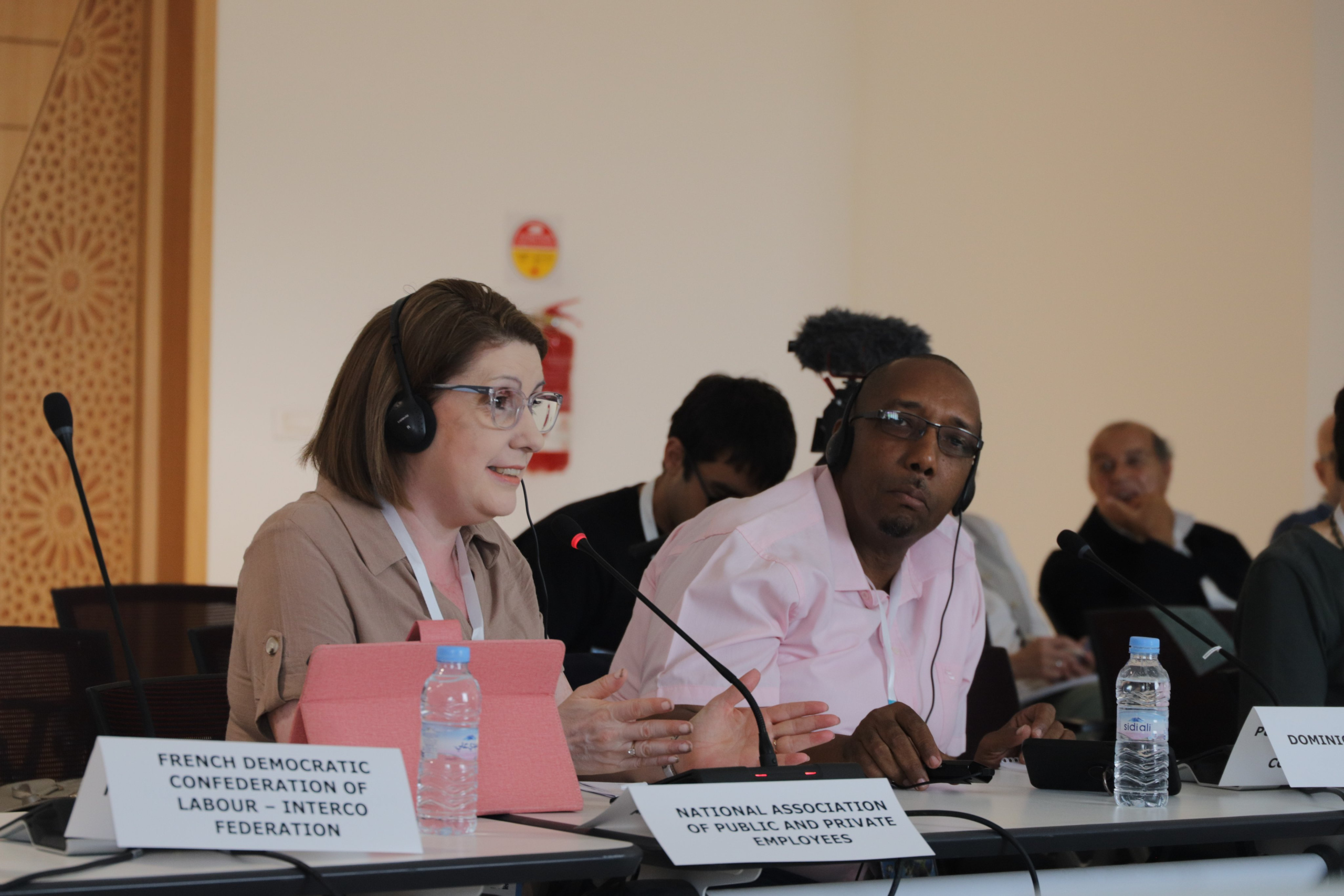
It was at the Barcelona UCLG retreat in February 2026 that the first technical meeting between UCLG and PSI took place, making clear that improving public services requires direct dialogue with those who deliver them. In Tangier, before the launch of the agreement, and as one of the multilateral coalitions working sessions that took place yesterday, a discussion on the operationalisation of the mechanism for structured dialogue, capacity and learning exchange took place.
Public service funding, water management and governance, AI and digitalisation, decent work, occupational safety and health, as well as the negative narrative around public sector workers, were some of the priorities discussed behind closed doors.
Concrete advocacy proposals for the last quarter of 2026 and for 2027 were also identified, with the intersections between climate, migration, gender equality, persons with disabilities and Indigenous Peoples more than present in the conversation.
As a Congress participant, take a moment today to think of the friends, family members, colleagues and staff who work in public service — and celebrate their work!