The Next Decade of the New Urban Agenda
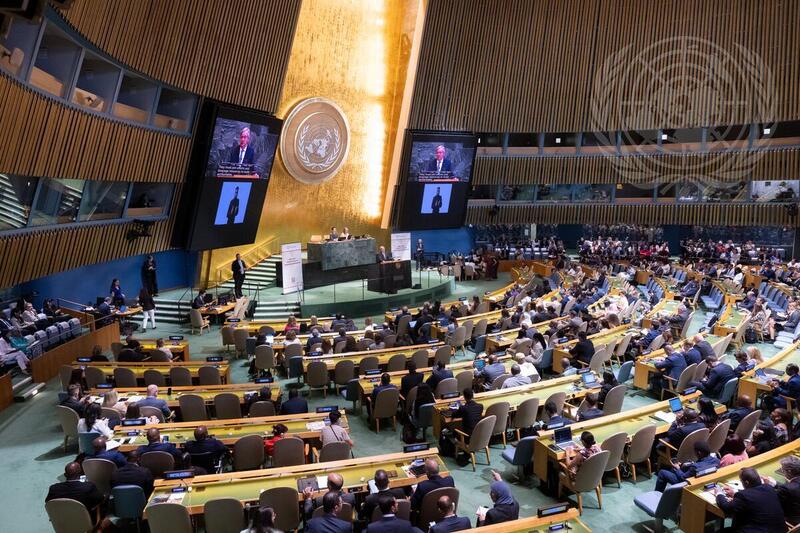
Ten years after governments adopted the New Urban Agenda in Quito, they returned to United Nations Headquarters to measure its progress. The High-Level Meeting of the General Assembly on the Midterm Review, held under the theme “Delivering Sustainable Urbanisation for All”, was conceived as a stocktaking exercise: an opportunity to assess how far the international community had advanced towards the vision agreed in 2016 and what remained to be done before 2036.
There was little sense that the vision itself had become outdated. If anything, the discussions suggested the opposite. Cities have become even more central to the world’s most pressing challenges than they were a decade ago. Climate change, demographic shifts, housing shortages, migration, public health, inequality and economic transformation are increasingly experienced through an urban lens. As delegates moved from one session to another, one question repeatedly came to the fore: the next decade of the New Urban Agenda will be defined by how governments answer a political question: who governs implementation?
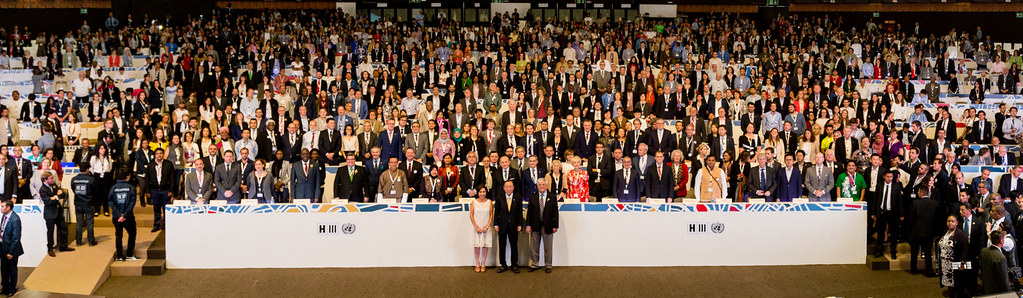
Looking back to Habitat III, Anacláudia Rossbach, Executive Director of UN-Habitat, recalled the optimism that surrounded the conference in Quito. Held in 2016, it became one of the largest United Nations conferences ever organised and brought together an unprecedented number of mayors, governors and local leaders alongside Member States. Its negotiations were, in her words, “one of the most participatory and inclusive processes of the United Nations”, helping establish local and regional governments as indispensable partners in the implementation of the New Urban Agenda. But the world of 2026, she argued, is no longer the world of 2016. Cities now absorb climate shocks, widening inequality, armed conflict, displacement and an unprecedented housing crisis simultaneously — pressures that have made the Agenda more necessary, not less. Her assessment was candid: more people now have access to electricity, water, sanitation and transport, yet more than one billion still live in informal settlements. “Urbanisation remains a powerful force for inclusion,” she told delegates, “but its benefits are still distributed too unevenly.”
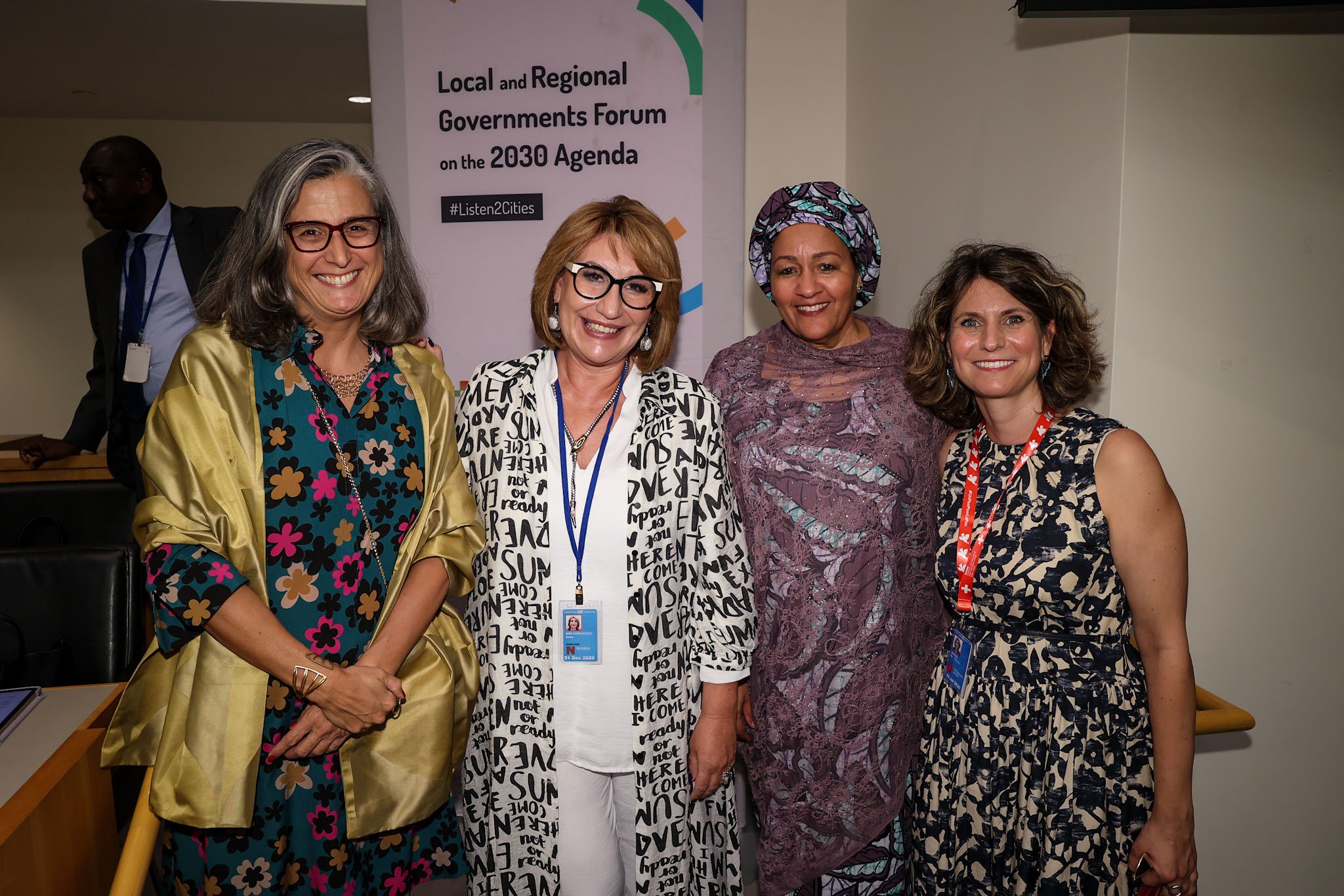
That sense of urgency was echoed by Amina Mohammed, United Nations Deputy Secretary-General, speaking on behalf of Secretary-General António Guterres. She reframed urbanisation as the place where global crises become local realities: families displaced by war arrive in cities, extreme weather destroys homes, and the rising cost of living is felt most acutely in neighbourhoods and communities. Her intervention offered perhaps the clearest expression of why the New Urban Agenda still matters. “The Sustainable Development Goals will be delivered at the local level, or they’ll not be delivered at all,” she said. With nearly 70 per cent of humanity expected to live in urban areas by 2050, the question is no longer whether cities matter, but whether they are empowered to deliver — “city by city, community by community”.
President of the General Assembly Annalena Baerbock placed the debate in equally direct terms. “Our future will be shaped mainly in cities,” she observed, while warning that the international community has yet to match the ambitions of the New Urban Agenda with the investment and implementation they require. Nearly three billion people still lack safe, adequate and affordable housing, and more than one billion continue to live in informal settlements.
That diagnosis was perhaps best summarised by Jan Szyszko, Poland’s Secretary of State for Development Funds and Regional Policy. The central challenge today, he argued, is no longer the absence of a shared vision for cities, but the “persistent and widening implementation gaps” preventing that vision from becoming reality.
Ecuador’s Minister of Economy and Finance, Sariha Moya, speaking on behalf of the country that hosted Habitat III, brought that discussion down to the practical realities of implementation. The next decade, she argued, must become “a decade of implementation and of results”. Ecuador’s experience in restoring predictable transfers to municipalities and mobilising nearly US$500 million in blended finance for affordable housing illustrated a broader point running throughout the meeting: ambitious urban agendas ultimately depend on functioning local institutions and reliable municipal finance. “The New Urban Agenda was adopted in Quito,” she concluded. “Its legacy can be seen in implementation — dignity in the home, security in one’s neighbourhood and reliable services.”
Taken together, these interventions pointed towards a common conclusion. The first decade of the New Urban Agenda has been remarkably successful in building consensus around integrated urban planning, affordable housing, climate resilience, gender-responsive cities, nature-based solutions and participatory governance. Few speakers questioned those priorities. Instead, intervention after intervention acknowledged a more uncomfortable reality: despite unprecedented political agreement, implementation continues to lag behind ambition.
Increasingly, speakers suggested that implementation depends as much on governance as on policy. The issue surfaced in discussions on housing, where planning alone was considered insufficient without predictable financing and stronger local institutions. It appeared in conversations on climate resilience, where municipal capacity was presented as decisive for adaptation. It returned in debates on disaster risk reduction, public transport and public services. Different themes led repeatedly to the same conclusion: empowering the institutions closest to citizens has become one of the defining challenges of sustainable urbanisation.
This evolution was particularly visible in the interventions from local and regional governments themselves. Habitat III marked an important political breakthrough by recognising multilevel governance as a cornerstone of the New Urban Agenda and by acknowledging the World Assembly of Local and Regional Governments as the representative mechanism through which local government associations would continue contributing to the follow-up and review of the Agenda. It reflected an understanding that implementation would require a permanent political dialogue between Member States and the organised constituency of local and regional governments.
Few interventions illustrated that shift more clearly than that of Koldo Casla, the United Nations Special Rapporteur on the right to adequate housing. Local authorities, he argued, should not be understood simply as another stakeholder participating in urban policy. They are part of the State and duty bearers responsible for guaranteeing rights. It was a subtle but important distinction, moving the discussion beyond participation towards public authority.
Fatimetou Abdel Malick, President of UCLG Africa and President of the Nouakchott Regional Council, approached the same question from another perspective. Local and regional governments, she argued, are the institutions that remain closest to citizens before, during and after crises, yet they continue to operate with limited fiscal autonomy and insufficient access to decision-making. Delivering global agendas requires more than assigning responsibilities; it requires equipping local authorities with the resources, capacities and political recognition necessary to fulfil them.
The Political Declaration adopted at the conclusion of the meeting reflected both the progress achieved over the past decade and the limits of the current political moment. Approved by 148 votes to two, it renews governments’ commitment to accelerating implementation of the New Urban Agenda, recognises the contribution of local and regional authorities, encourages stronger institutional engagement with them and reaffirms the importance of mechanisms such as the High-Level Political Forum, the Open-ended Intergovernmental Working Group on Adequate Housing for All and the World Urban Forum.
Those commitments are significant. They reaffirm the role of local and regional authorities in implementing the New Urban Agenda and strengthen existing spaces for dialogue within the United Nations system. Yet the comparison with Quito is revealing. While the New Urban Agenda explicitly recognised the World Assembly of Local and Regional Governments within its follow-up architecture, the Midterm Review Declaration makes no reference to that mechanism. Its language speaks of engagement, consultation and contribution, but stops short of advancing the governance architecture established in 2016. Rather than opening a new institutional chapter, it largely consolidates the arrangements already in place.
In many respects, that tension may become the defining legacy of the Midterm Review. The first decade of the New Urban Agenda succeeded in building an unprecedented global consensus around the importance of sustainable urbanisation. The second will almost certainly be judged on something different: whether governments are prepared to adapt the institutions of multilateral cooperation to the realities of implementation. Whether the institutions closest to citizens are given the authority, resources and political space to do it.