

WHAT CHANGED BETWEEN DAEJEON AND TANGIER?
In Daejeon, the municipal movement adopted the Pact for the Future of Humanity. It was a statement of direction at a time when cities and territories were emerging from the pandemic and demanding stronger recognition in global decision-making.
Tangier builds on this and takes the conversation one step further.
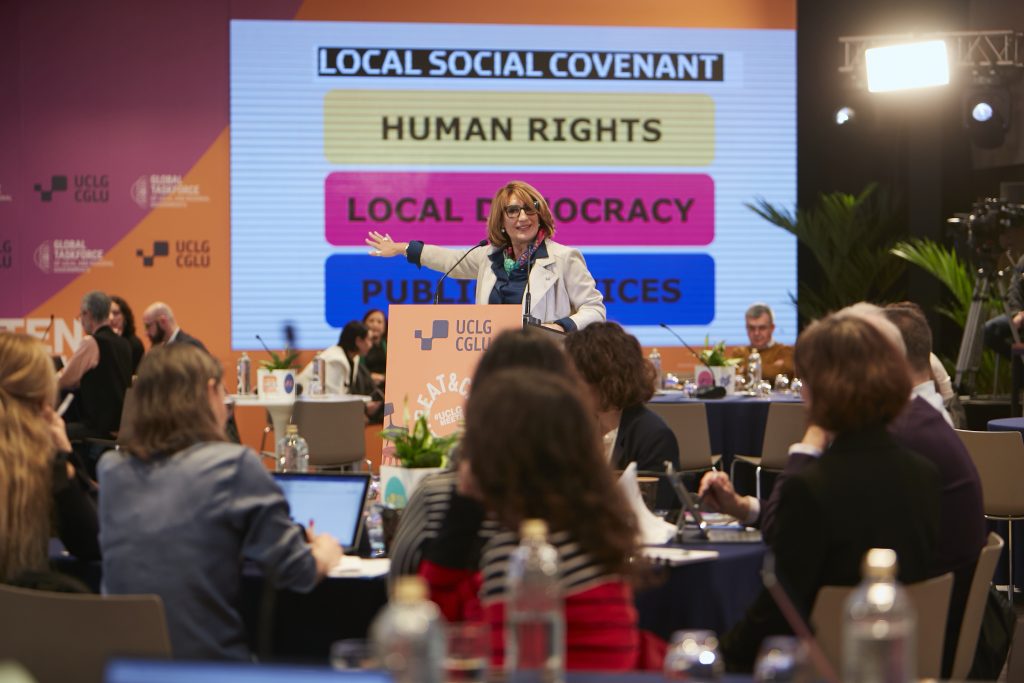
The Local Social Covenant aims to strengthen the policies, institutions and partnerships needed to protect rights, sustain peace, advance equality and improve everyday life.
The shift can be read in two questions:
DAEJEON ASKED: What future do we want?
TANGIER ASKS: What must we guarantee?
THE LOCAL SOCIAL COVENANT IN FIVE QUESTIONS
- WHAT IS IT?
A political framework to rethink the relationship between people, communities and public institutions from the local level. It places rights, services, care, dignity and participation at the centre of the municipal agenda. - WHY NOW?
Because communities are facing pressures that can no longer be addressed through isolated policies. Housing, care, climate, food, health, culture, safety and trust are increasingly connected. The Covenant responds to that interdependence. - WHAT DOES IT MEAN FOR LOCAL GOVERNMENTS?
It recognises local and regional governments not only as service providers, but as democratic institutions capable of convening communities, defending rights and shaping global debates from territorial realities. - WHAT DOES IT MEAN FOR PEOPLE?
At its best, it means that rights become visible in daily life. A home that is not out of reach. Care that is recognised and supported. Public services that are accessible and reliable. Food, health and culture treated as part of dignity Participation that is not symbolic. Local institutions able to respond when daily life becomes harder. - WHAT HAPPENS NEXT?
The Local Social Covenant will inspire the Tangier Outcome Document. Everyday essentials and the governance of proximity will provide the framework for the next UCLG mandate, the Triennial Work Plan, the post-2030 debate and the work of cities, regions and territories.