

A GUIDE TO THE WEEK BEHIND THE PROGRAMME
The Tangier programme is dense by design.
Meetings begin before the official opening. Sessions overlap. Regional caucuses, statutory meetings, assemblies, Town Hall working sessions, Local4Action dialogues, launches, partner-led conversations and the Tangier-Morocco Track all unfold across the same four days.
A Congress of this scale is best understood by looking at how the week is built: some spaces prepare positions, some take decisions, some open political debates, some connect partners, and some show how the host city and country enter the global conversation. For readers arriving in Tangier, or following from elsewhere, the first task is to know where to look.
Start before the opening
The official opening will take place on 23 June, but by then the Congress will already have begun.
On 22 June, regional caucuses from MEWA, Africa, Europe, ASPAC and LATAM will meet. Town Hall working sessions will begin. Local government representatives and public service workers will discuss the future of local public service provision. Development cooperation, metropolitan inequality and territorial solidarity will also enter the week before the formal ceremony.
Follow the tracks, not every session
The programme can look overwhelming if read session by session. If you read it by track, it will be easier to understand.
The Statutory Track is where UCLG’s institutional decisions are made.
The Assembly Track is where regions and constituencies organise their voices within the world organisation.
The Town Hall brings civil society and partners into the policy process.
The Local4Action spaces show how local practice, partnerships and experimentation feed into political debate.
The Tangier-Morocco Track gives the host city and country a substantive role in the Congress conversation.
The tracks also help participants make choices. A mayor interested in institutional direction may follow the statutory meetings. A civil society partner may look closely at the Town Hall.
The programme is not asking everyone to attend everything. It is offering different ways into the same political week.
Know where decisions happen
The Executive Bureau, General Assembly and World Council are part of UCLG’s statutory life. They are also where Tangier becomes more than a gathering of local leaders.
The Executive Bureau will meet on 23 June. The General Assembly follows later that day, and the World Council meets on 24 and 25 June.
These meetings matter because they connect the Congress to the organisation’s next mandate. They are where the movement reviews the previous cycle, discusses political direction, adopts priorities and prepares leadership renewal.
The final day will be especially important. The World Council is expected to take up the adoption of the Local Social Covenant, the Triennial Work Plan and the elections of UCLG leadership.
For anyone trying to understand the political weight of Tangier, this is where to focus.
The Congress will produce many conversations. The statutory track shows which ones are turned into mandate.
Watch the host city
Host cities often appear in congresses through welcomes, visits and official photographs.
The Tangier-Morocco Track brings the host territory into the substance of the programme, with sessions on port city ecosystems, green growth, climate loss and damage, urban engineering, diaspora representation, food security, South-South cooperation and democratic transformation from the perspective of the Global South.
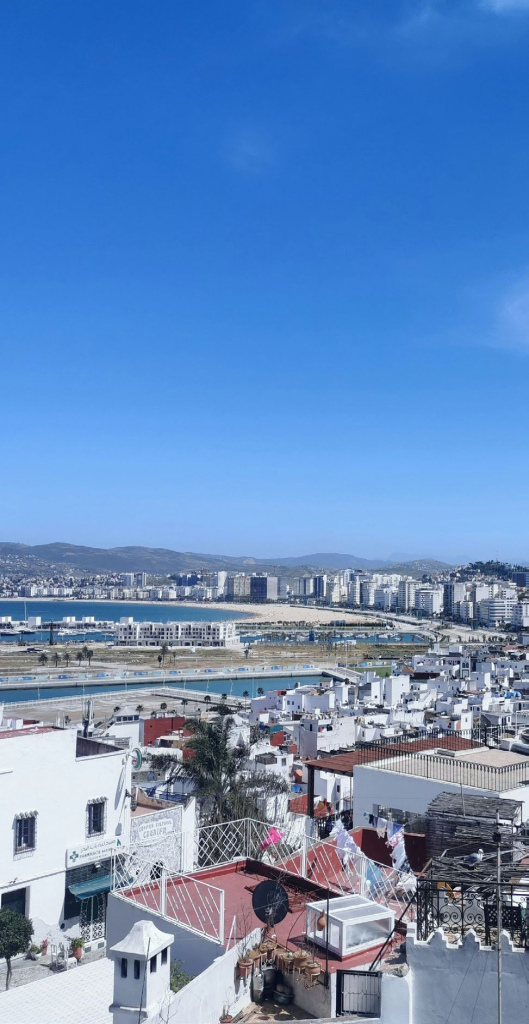
These debates resonate differently in Tangier, a city shaped by movement, geography, infrastructure, diplomacy and proximity between Africa and Europe. The host city is more than a backdrop to the Congress.
Read the week in four movements
Each day has a different function.
22 June is about preparation.
Regional caucuses, Town Hall sessions, public service workers, cooperation actors and metropolitan voices begin aligning messages before the Congress opens formally.
23 June is about institutional direction.
The Executive Bureau and General Assembly review the previous cycle and look towards the next one. The official opening brings the Congress into public view.
24 June is about representation and everyday essentials.
The first UCLG Women Assembly places women’s leadership and feminist municipalism inside the Congress week. The World Council brings core social priorities into the institutional debate.
25 June is about decisions and handover.
The World Council is expected to adopt the Local Social Covenant and Triennial Work Plan, and to elect UCLG’s leadership. The closing ceremony marks the transition to the next mandate.
26 June extends the conversation to metropolitan leadership.
The Metropolis Assembly brings the metropolitan agenda into the final stretch of the week.
That is the basic rhythm of the week: preparation, direction, representation, decision.
Do not try to hear everything
The most useful way to follow Tangier is to look for the connections, instead of listening to every session.
Where do public services appear? Where does housing move from policy concern to political priority? Where does care connect with gender, ageing, public work and community life? Where does the post-2030 agenda enter the discussion? Where does the host city change the way the Congress speaks about Africa, the Mediterranean and the Global South?
Those connections will tell the story of the Congress more clearly than any single session.
Seven Signals to Watch in Tangier
- Leadership renewal — UCLG enters a new mandate.
- Universal local public services — the Local Social Covenant begins with services.
- Public workers — the renewal of the UCLG–PSI agreement brings labour into the debate.
- Housing justice — the Housing Justice
Academy moves housing into the political centre. - Women’s leadership — the first UCLG Women Assembly signals a stronger feminist municipal agenda.
- Post-2030 — local governments want to shape the next global agenda early.
- Tangier-Morocco Track — the host city brings Africa, the Mediterranean and the Global South into the Congress conversation.