

More than a roof, a fundamental right
On 24 June, UCLG unveiled the Housing Justice Academy and defined how it should take shape as a collective platform to strengthen leadership, peer learning, and agenda-setting around housing as a human right and public common good, given that housing justice is a core expression of the right to the city. This is grounded in the recognition that the housing crisis is structural, cuts across territories, and cannot be addressed through fragmented responses.
Greg Munro, Director of Cities Alliance, facilitated the session. “Nearly 40% of the world’s population lacks access to safe and resilient housing. We need to construct 100,000 units every single day to meet that demand”, he explained. In the UN-Habitat World Cities Report, recently presented at the 13th Session of the World Urban Forum in Baku, member states affirm that simply building more housing is not enough. “We need large-scale public investment, integrated land-use planning and the prioritisation of human rights”, Greg Munro added. He sees housing as one of the most powerful levers that local governments and cities have for sustainable development, if done the right way.
In India, this looks like lifting 200 million people out of poverty by building houses to give people dignity. They are registered in the name of the woman of the household, an important first that recognises the importance of women’s land rights – in line with the 2019 Durban Agenda that positions housing as a human right and the foundation for dignity, belonging, and climate resilience. Mario Bergara, Mayor of Montevideo, explained what successful housing provision looks like in his city: “We recognise that the housing crisis and urban inequalities cannot be solved through isolated interventions. We have come up with an answer that combines different policies around land access, the refurbishment of urban spaces, and neighbourhood improvements while supporting participation and community-building.”
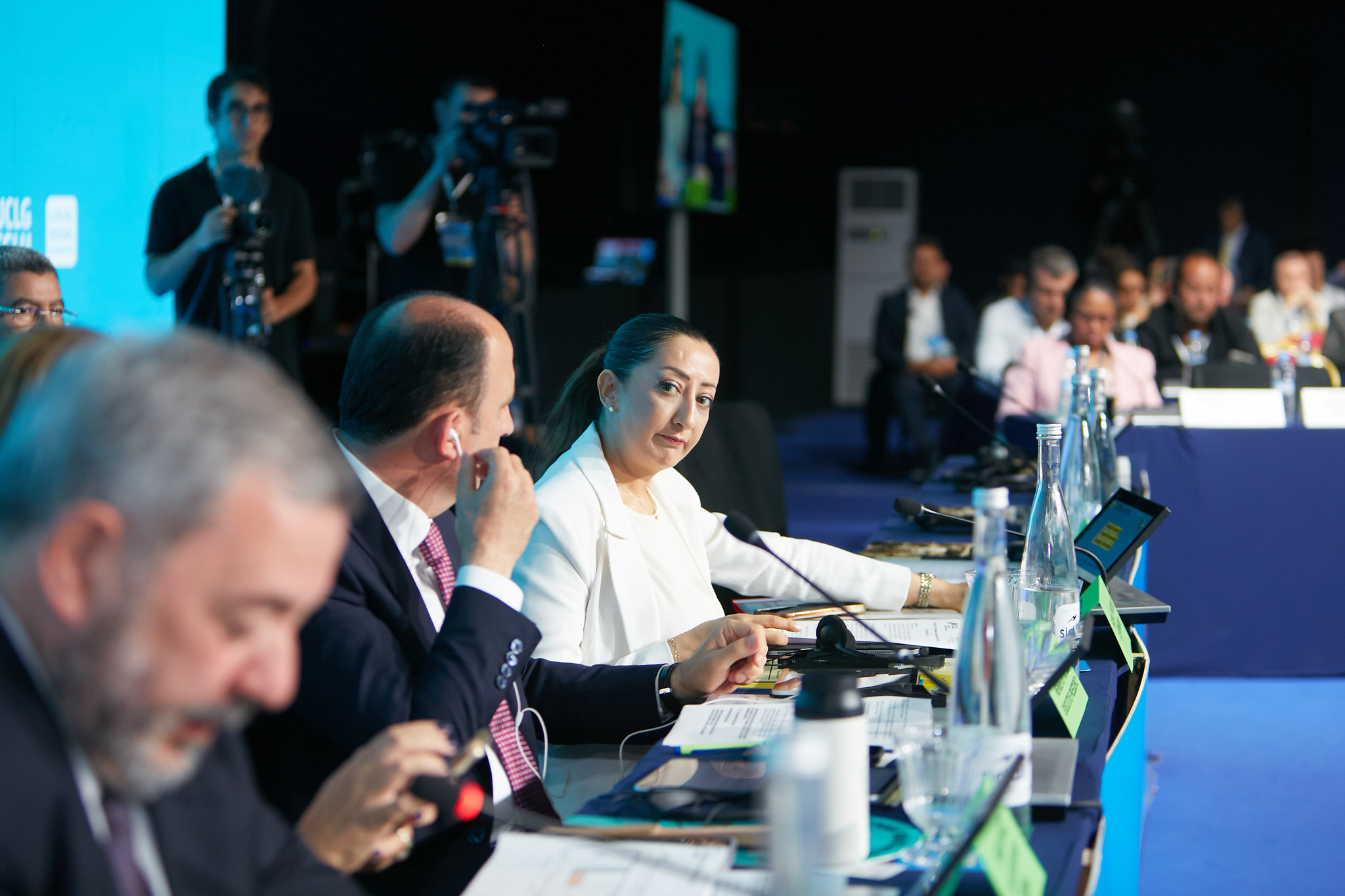
Fatiha El Moudni, Mayor of Rabat, said: “Housing is more than a roof, it is a fundamental right, the foundation of social inclusion, and a key condition for equal opportunities.” Morocco has moved beyond simply providing housing units, she added. Instead, the country has come up with a new development plan and metropolitan masterplan that treats housing as essential for the dignity, safety, and inclusion of all citizens. “The Academy can play a vital role by strengthening local capacities, providing access to data, showcasing successful integrated planning, and demonstrating ways in which women and the elderly, people with disabilities and vulnerable households can be supported.” She called for making the Academy a practical tool, emphasising that African cities are not only recipients of solutions, but also producers of innovation, knowledge, and experience that can help shape the global agenda.
Giving an input from the UCLG Townhall, Camila Cociña from IIED and co-convener of the Housing Justice Hub, outlined what housing justice really means. This includes understanding the discriminatory practices of the housing market, preventing forced evictions and displacements, f inancing systems that support the value of social housing, and placing inclusion at the centre. “We need cities to champion these agendas, to show us the way. Many solutions are already out there but we must upgrade our competencies and understand what is missing. This includes reaching out to grassroots movements and those usually at the margins of housing”, she said about the Housing Justice Academy.
Speaking for local and regional governments, Lyubov Zaitseva, President of the Izhevsk City Duma (Russia), shared the strategy her city has for sustainable urban development: “We are aiming to ensure decent living conditions, not just through housing, but also through a comfortable living environment. This summer alone, we are opening five new public spaces and are working on implementing the 15-minute city concept.” She expressed her hope that the Academy will be a space to create practical tools for municipalities around the world to develop housing justice standards based on experiences.
“This is an important step towards commoning. We want to understand housing in a different light with a different type of financial architecture. We see housing not as a commodity but as a human right”, Emilia Saiz explained. The audience added valuable perspectives on circular economy and the reconstruction of destroyed cities, for example in Gaza. “There can be no housing justice without inclusion, no inclusive housing without opportunity, and no strong Local Social Covenant without empowering local governments”, Fatiha El Moudni summed up the discussion. This conviction will turn the Academy into a vehicle that will operationalise the housing pillar of the Local Social Covenant and make housing justice a shared political priority of the municipal movement.